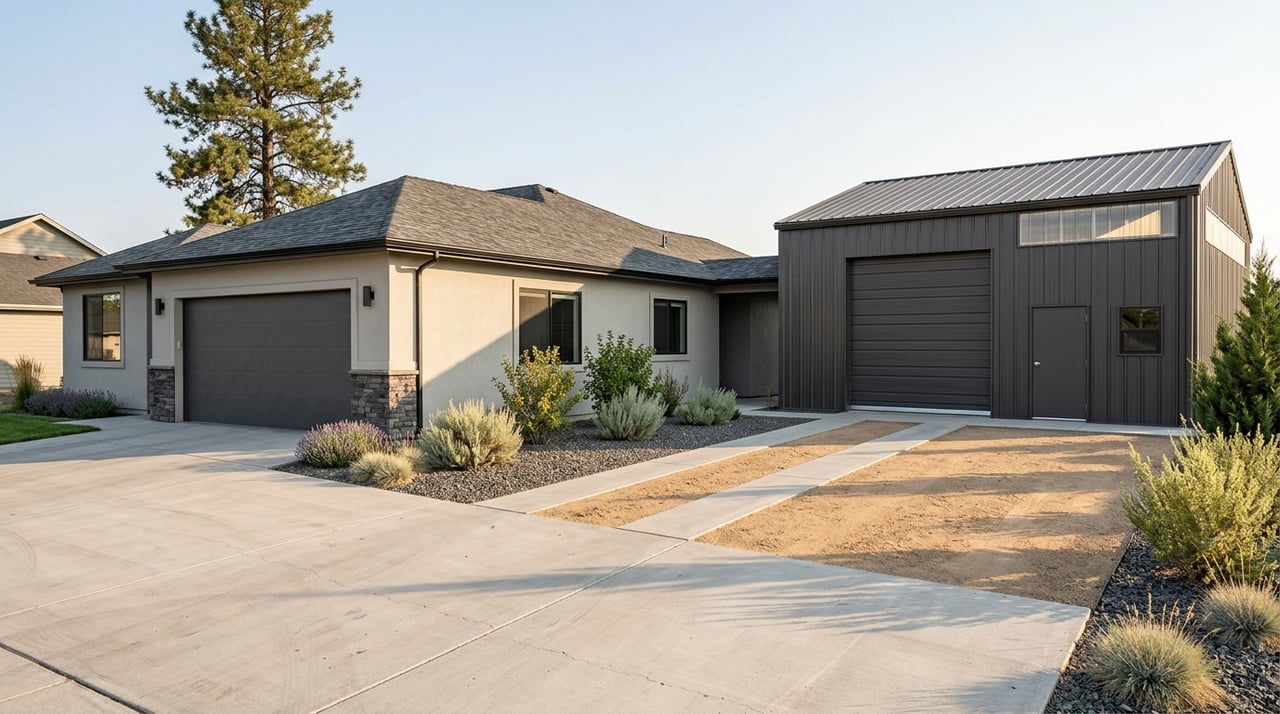
Want a home in West Richland where your RV, trailer, tools, or hobby gear actually fit your life? You are not alone. Many buyers look for extra parking or a future shop, but the details that matter most are often zoning, permits, lot layout, and access. If you want to avoid expensive surprises, this guide will help you spot the right opportunities and ask the right questions early. Let’s dive in.
Why West Richland Stands Out
West Richland has some low-density residential land that can make a shop, detached garage, or extra parking more realistic than on a typical smaller city lot. That does not mean every property allows the same setup, though. In West Richland, these features are treated as zoning and permit issues, not casual add-ons.
The city’s official zoning map includes districts such as RL-40, RL-20, and UT, along with other residential, commercial, and industrial zones. In the residential land-use matrix, accessory buildings are permitted in RL-40 and RL-20. The city also directs buyers and property owners to verify zoning and allowed uses through the official zoning map and Title 17.
Focus on Low-Density Lots
If your goal is a shop or extra parking, low-density lots are usually the best place to start. In West Richland, RL-40 and RL-20 are the main residential zones to watch because they are tied to larger minimum lot sizes.
In RL-40, the minimum single-family lot area is 40,000 square feet when served by city water and sewer. In RL-20, the minimum is 20,000 square feet. In simple terms, that often means more usable yard area for a detached structure, trailer pad, or side parking, although the final answer still depends on setbacks, easements, and lot coverage.
Don’t Overlook UT Parcels
The UT district can also matter if you want more room to work with. The city’s site-development table shows a 1-acre single-family lot area in UT.
That can create more flexibility than a standard in-town lot, but you still need to confirm the details for that specific parcel. Utilities, access, setbacks, and the exact zoning rules can all affect what is possible.
Listing Language Can Be Misleading
A listing might mention a “shop,” “detached garage,” “outbuilding,” or “storage building.” Those words are helpful clues, but they are not proof that the structure is permitted or that you can expand it later.
The city’s rules still control what can be built, where it can sit on the lot, and how much of the site it can occupy. That is why a good-looking setup in photos should always be verified before you move forward with an offer.
Accessory Buildings Are Allowed, With Limits
West Richland does allow accessory buildings in certain residential zones, but they are not unrestricted. The city says these buildings are for personal use only and may not be used as a dwelling or for business activity unless a separate approval path applies, such as an ADU or a large-scale home occupation.
The code also says accessory buildings should not be built before the main home, though they may be built at the same time. If you are buying vacant land or a property with an unusual setup, that detail matters.
Size Depends on More Than Visual Space
A lot may look big enough for a large shop, but visual space is not the full story. In RL-20, RL-40, and UT, maximum accessory-building size is governed by lot-coverage standards in the code, not by one simple citywide cap.
That means the real question is not just, “Will it fit?” It is also, “Does it fit legally once setbacks, coverage, and site conditions are applied?” A site plan matters more than a quick walk through the yard.
Shipping Containers Need Extra Caution
If you see a property using a cargo container for storage or workshop space, pause and verify everything. West Richland says cargo shipping containers and similar enclosures are not permitted accessory structures in residential zones.
That makes container-based storage a major red flag for buyers. If it is shown in a listing, do not assume it is approved just because it is already there.
Permits Matter More Than Buyers Expect
One of the easiest ways to get into trouble is assuming a shed, carport, or parking pad is legal because it already exists. In West Richland, even small projects can involve city paperwork.
The city’s FAQ says detached storage sheds that are 200 square feet or less require a no-fee permit and a site plan showing location and setbacks. Sheds over 200 square feet require a building permit. The city also requires permits for portable or temporary carports.
That means permit history should be part of your early due diligence, not a last-minute concern. A structure that looks useful today may become a problem later if it was never approved.
Extra Parking Has Its Own Rules
If you want room for extra vehicles, a boat, a work trailer, or an RV, the parking rules matter just as much as the building rules. West Richland requires real off-street parking in residential districts.
The code requires at least two motor-vehicle spaces per dwelling in graveled or paved space. One additional space may be approved, and garage area does not count toward that minimum. So if a listing relies on garage bays to make the parking situation look bigger, that may not match the city’s required off-street parking standard.
RV Storage Is Not Unlimited
Many buyers assume a large lot means easy RV storage. In West Richland, that is only partly true.
Recreational vehicles may not be used as permanent or temporary dwelling units in residential zones. Guests may park or occupy an RV while visiting for up to 30 days in one consecutive 12-month period, but the RV must remain readily transportable, cannot be stored in front-yard setbacks, and cannot be stored on undeveloped property.
Street Parking Has Tight Limits
If your plan depends on keeping a trailer or RV on the street, that is a warning sign. West Richland’s code-enforcement guidance says large vehicles may not stay on streets for more than 12 hours in a 24-hour period.
RVs may not exceed 36 hours in a 7-day period, and trailers may not exceed 24 hours in a 7-day period. The city also prohibits non-vehicles from being stored in the improved public right-of-way.
Why Layout Often Matters More Than Lot Size
A bigger lot is helpful, but function often matters more than raw square footage. A property with clean side access, workable setbacks, and properly graveled or paved parking may serve you better than a larger parcel with awkward access or unclear permit history.
This is especially true if you plan to store an RV, pull a trailer through a gate, or build a detached shop later. The shape of the lot and the location of easements can make a big difference in what you can actually use.
A Smart Touring Checklist
When you tour homes in West Richland, it helps to think beyond the photos and staging. Bring your attention back to what you need the property to do for you day to day.
Here are a few smart questions to ask before you get too attached:
- Ask for the property’s zoning and verify it against the city’s zoning map and Title 17.
- Ask whether the shop, shed, carport, or parking pad was permitted.
- Measure side-yard access before assuming an RV or trailer will fit.
- Check for easements that could limit parking or future construction.
- Verify whether any intended business use would require home-occupation approval.
- Be cautious if a listing shows a shipping container, trailer setup, or RV arrangement that may not meet city rules.
What This Means for Value
Garages and workshops can add value, but the premium is highly specific to the property and the local market. A 2025 national analysis by NAHB found that garages add around 10% value on average nationally, partly because they offer protected parking plus storage or hobby space.
That figure is only a broad benchmark, not a local rule for West Richland. Here, the value impact will depend on comparable sales, lot size, condition, usability, and whether the structure was properly permitted.
For buyers, the practical takeaway is simple. A well-placed, permitted, usable shop or parking setup is usually more valuable than a questionable structure that creates future code or permit issues.
Buy With a Verification Mindset
If you want a shop or extra parking in West Richland, your best opportunities will usually come from larger low-density lots with clean access and clear permit history. RL-20, RL-40, and some UT parcels are often the first places to look, but every property still needs case-by-case review.
The biggest mistakes are assuming an existing shed or carport is legal, assuming street storage will work for an RV or trailer, or assuming a detached building can be used however you want. A calm, informed review upfront can save you time, money, and frustration later.
If you want help sorting through West Richland properties with shop potential, RV space, or extra parking, Desert Edge Realty Group can help you look past the listing photos and focus on what works in real life.
FAQs
What West Richland zones are best for a shop or extra parking?
- RL-40 and RL-20 are usually the main residential zones to watch because they have larger minimum lot sizes, and accessory buildings are permitted there. Some UT parcels may also offer more flexibility, depending on the property.
Does a West Richland listing that says “shop” mean the structure is approved?
- No. Terms like shop, outbuilding, or detached garage are clues, but buyers should still verify zoning, permits, setbacks, and lot-coverage rules.
Do small sheds need permits in West Richland?
- Yes. Detached storage sheds of 200 square feet or less require a no-fee permit and a site plan, while sheds over 200 square feet require a building permit.
Can you store an RV on a residential property in West Richland?
- Possibly, but there are limits. RVs cannot be used as permanent or temporary dwelling units in residential zones, cannot be stored in front-yard setbacks, and cannot be stored on undeveloped property.
Can you keep a trailer or RV on the street in West Richland?
- Only for limited periods. City code-enforcement guidance says RVs may not exceed 36 hours in a 7-day period on streets, and trailers may not exceed 24 hours in a 7-day period.
Are shipping containers allowed for storage in West Richland residential zones?
- No. West Richland says cargo shipping containers and similar enclosures are not permitted accessory structures in residential zones.