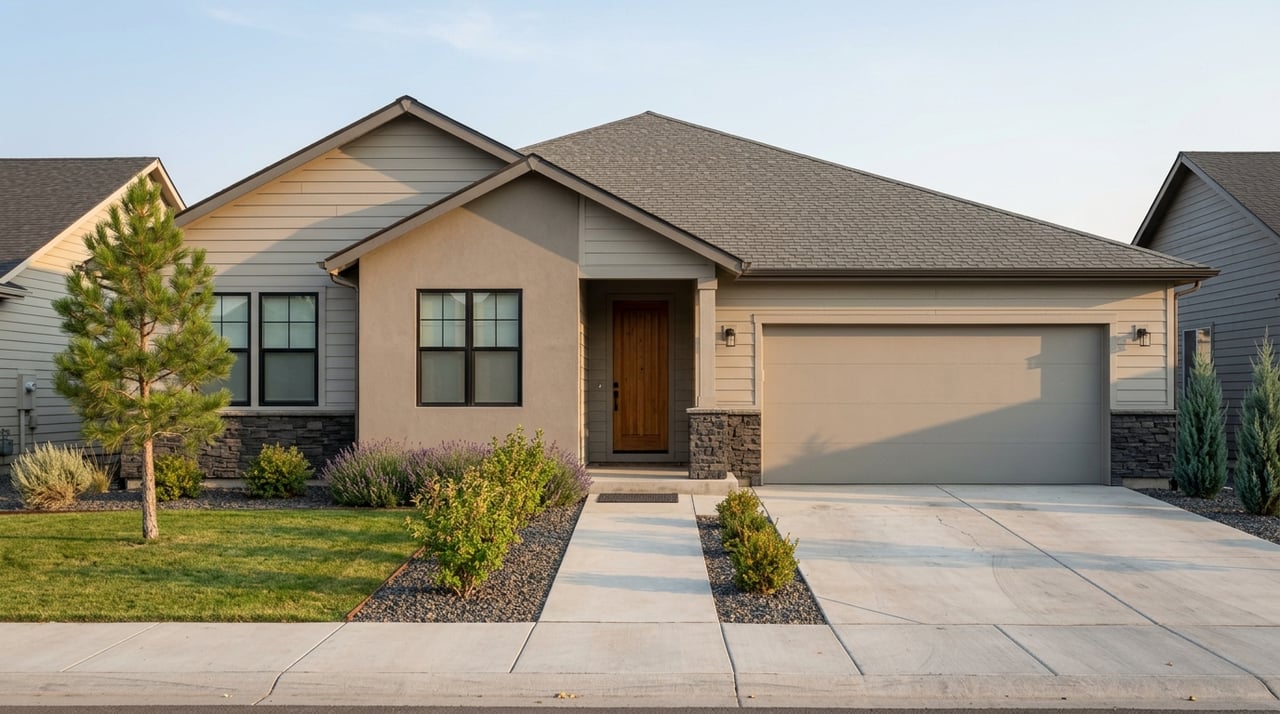
Two 1-acre listings on the west side of town can look identical on the portal. Same price band, same shop-friendly setback, same view of the vineyards. One closes in three weeks. The other stalls for four months while the buyer chases a perc test, a water-right question, and an irrigation hookup that the listing sheet quietly implied but never confirmed.
In West Richland's current market, the parcel's utility path is doing more work than the list price. Which irrigation district serves the lot, whether the septic has a documented path through the health district, and whether the well is legally sized for your intended use will decide if your offer survives inspection. That is the single idea worth holding through the rest of this post.
The three questions your offer should already answer
Before you sign, you should be able to write down, in one sentence each:
Which irrigation district (if any) serves this parcel, and is water actually delivered to the lot line? Is there a current on-site sewage permit or a completed perc test on file with Benton-Franklin Health District? Is the household water source a public connection or a permit-exempt well, and does the intended use fit inside the state cap?
If any of those three answers is "we'll find out during inspection," you are giving the seller free time and giving yourself an inspection window with real money at stake.
Why CID, KID, or neither changes the offer
Irrigation in West Richland is not a citywide utility in the sense buyers usually assume. The City of West Richland's utilities page is direct about it: most of the city is served by Columbia Irrigation District, a small portion by Kennewick Irrigation District, and the city itself only provides the delivery infrastructure in three defined areas. Outside those service footprints, irrigation water is a private-well or shared-source question, not a hookup.
That distinction shows up in a few specific ways during a transaction.
| Utility path | What it means for the offer | What to request before removing contingencies |
|---|---|---|
| Columbia Irrigation District (CID) | Assessment travels with the parcel. Annual dues and turn-on dates set by CID. | Current account statement, delivery confirmation to the lot, any deferred assessments |
| Kennewick Irrigation District (KID) | Same structure, different assessment schedule and delivery calendar. | Account statement, service map confirming the parcel is inside KID, hookup status |
| No district service | Irrigation is well-based, shared-source, or none. Landscape water rides on the domestic well. | Well log, water-right documentation, any shared-well agreement recorded against title |
A shared well is the case that catches buyers the most often. Listings will describe "shared well, neighbor only uses for irrigation" as a feature. That framing skips the actual question: is there a recorded well-share agreement running with the land, and what are the maintenance cost-share terms? If it is not recorded, it is a handshake, and handshakes do not survive a resale five years from now.
Septic runs through Benton-Franklin Health District
For any parcel not on city sewer, the timeline you can actually promise a lender runs through Benton-Franklin Health District, which permits, oversees design and installation, and inspects on-site septic systems with design flows under 3,500 gallons per day. That is the gatekeeper.
What this changes in practice:
- A "perc test approved" note in a listing description is not a permit. Ask for the file number and pull the record.
- A drainfield that was sized for a 3-bedroom will not automatically expand to fit the 5-bedroom shop-house you want to build. The design flow governs.
- A failed or unknown system found at inspection restarts the clock. Design, review, install, and inspection can easily push a rural closing into a second quarter.
- If the parcel is unimproved and the seller has not paid for a perc test, that cost and that timeline belong to you unless the offer says otherwise.
The cleanest offers on West Richland acreage attach a septic feasibility contingency that references the county file directly, not a generic inspection clause.
A permit-exempt well is not a blank check
Washington's Department of Ecology allows a permit-exempt well to support domestic use up to 5,000 gallons per day, plus limited lawn and garden irrigation, with local basin and water-right rules layered on top. That sounds generous until you read it against a real plan for the parcel.
A 5,000 gpd domestic cap covers a single-family home and a modest yard comfortably. It does not automatically cover a hobby vineyard on 5 acres, livestock at scale, a second dwelling, or a large-lawn landscape that West Richland's summer heat will punish. If your plans for the lot include any of those, the well is not a household utility question, it is a water-right question, and it needs to be answered before you release your inspection contingency, not after.
Two follow-up items worth putting on paper:
- The well log from the Department of Ecology, which tells you depth, casing, static level, and yield at construction.
- A conversation with a licensed well contractor about current yield, because a 30-year-old well with a documented 20 gpm yield at drilling may deliver considerably less today.
Form 17 gives you a clock, so use it
Washington's seller-disclosure statute, RCW 64.06, requires the seller to deliver a completed Form 17 disclosure within five business days of mutual acceptance, and gives you three business days after that to rescind based on what the disclosure reveals. The water section asks the seller to identify the household water source, whether the property receives irrigation water, and whether an outdoor sprinkler system exists. The sewer section covers system type and any fee or permitting issues.
Those are the two sections that carry the friction we are talking about. Read them the same day they arrive. If a well is disclosed with no yield history, if irrigation water is claimed with no district named, or if the sewage disposal answer references a system the seller "believes" is functional, you have three business days to say so in writing.
Washington's buyer-beware caselaw is stricter than most first-time buyers expect. In Douglas v. Visser, 173 Wn. App. 823 (2013), the court held that a buyer who received any indication of a defect and failed to investigate before closing could not later recover from the seller. The Form 17 water and sewer answers are exactly the kind of indication that court decision points to. Read them as your assignment, not the seller's paperwork.
What June 2026 looks like on the ground
The West Richland median sale price sat at $405,000 in June 2026, with a median of 5 days on market and a sale-to-list ratio of 101.3 percent against roughly 5.5 months of inventory, per the Beyond Real Estate market report drawn from NWMLS. Broader Tri-Cities data from PACMLS puts the June median around $445,000, in a tight $440,000 to $446,000 band that held through spring.
Read that against the friction above and the picture sharpens. In a five-day-DOM market, you cannot afford to spend the first ten days of an inspection window pulling septic records and calling CID for an account statement. You need those answers before you write. That is the shift this post is asking you to make. In the balanced market of the last few months, the offer with pre-cleared utility diligence beats the offer with the higher number and a hopeful contingency, because the seller sees a closing calendar they can trust.
The offer-side checklist
Before you sign, put these five items in your file:
- Parcel jurisdiction confirmed against the West Richland zoning map, which the city updated in October 2024 and later amended for on-site-sewer parcels. RL-40 and RL-20 rural-residential districts each carry different setback and minimum-lot rules.
- Irrigation district identity and account status, in writing, from CID or KID, or written confirmation that neither serves the parcel.
- Benton-Franklin Health District file number for any existing on-site sewage system, or a documented perc test result for an unimproved lot.
- Well log from Ecology plus a current yield check, matched against your intended use of the property.
- A Form 17 review completed inside the three-business-day rescission window, not on day four.
None of that requires a specialist. It requires that the questions get asked in the offer, not the inspection period.
Short FAQ
Does a shared well kill financing? Not on its own. Most lenders will fund on a shared well if there is a recorded well-share agreement running with the land. An unrecorded arrangement is where financing tends to stall.
If the parcel is inside city limits, does that mean city sewer? Not automatically. West Richland has areas inside city boundaries that are served by on-site septic. Confirm sewer availability at the address, not the city line.
Is a completed perc test the same as a septic permit? No. A perc test is a soil suitability result. A permit is the health district's approval of a specific system design for a specific structure. Buyers regularly conflate the two.
Does an irrigation district assessment show up in closing costs? It shows up in the tax bill and travels with the parcel. Ask the title company to pull the current statement so you know what you are inheriting on day one.
If you are writing on a West Richland home or acreage lot this summer and want the utility questions answered before you sign, Desert Edge Realty Group can walk the parcel with you, pull the records, and help you shape an offer the seller can actually close on. That is the work worth doing early.